

Australia’s vast landscape presents unique challenges for regional aviation, where distances are measured in thousands of kilometres and many destinations remain accessible only by air. For travellers seeking reliable aircraft charter solutions to reach remote mining sites, regional business centres, or exclusive outback destinations, choosing the right aircraft becomes crucial. Two standout performers in the regional aviation market offer compelling but different solutions: the versatile Pilatus PC24 business jet and the proven Beechcraft King Air 350 turboprop. Both aircraft excel in accessing challenging regional airports, yet each brings distinct advantages to Australian charter flights.

Australia’s Regional Aviation Landscape
Regional Australia encompasses some of the world’s most demanding operating environments for aviation. From the red dirt airstrips of Western Australia’s Pilbara region to the short sealed runways of tropical Queensland mining towns, aircraft must demonstrate exceptional versatility. Many regional airports feature runways shorter than 1,500 metres, whilst others offer nothing more than gravel strips that test both aircraft capabilities and pilot skill.
Weather conditions add another layer of complexity. Summer temperatures regularly exceed 40°C across much of regional Australia, affecting aircraft performance and requiring careful payload and performance calculations. Seasonal flooding can isolate communities for months, making reliable charter flight access essential for medical emergencies, supply deliveries, and workforce rotation.
The demand for private jets and specialised aircraft charter services continues growing across sectors including mining, agriculture, tourism, and emergency services. Regional routes that once relied solely on scheduled airlines now increasingly utilise charter aircraft to provide flexible, direct access to remote destinations. This evolution has created opportunities for aircraft that combine short runway performance with modern comfort and efficiency.
Pilatus PC24: The Super Versatile Jet

Switzerland’s Pilatus Aircraft created something remarkable with the PC24—a business jet that performs like a turboprop on short runways whilst delivering true jet speed and range. With an impressive 3,700-kilometre range, the PC24 represents a breakthrough in aircraft charter flexibility for Australian operators.
The PC24’s twin Williams FJ44-4A turbofan engines produce 3,420 pounds of thrust each, enabling the aircraft to achieve a maximum cruise speed of 815 km/h. Yet despite this jet-like performance, the PC24 requires only 820 metres for takeoff and 770 metres for landing—distances that open access to hundreds of regional Australian airports typically reserved for turboprops.
What truly sets the PC24 apart is its certification for unpaved runway operations. The aircraft can safely operate from grass, gravel, sand, and even snow-covered surfaces—a capability virtually unknown amongst business jets. This certification, combined with robust landing gear designed for rough surfaces, makes the PC24 uniquely suited to Australia’s diverse regional airport infrastructure.
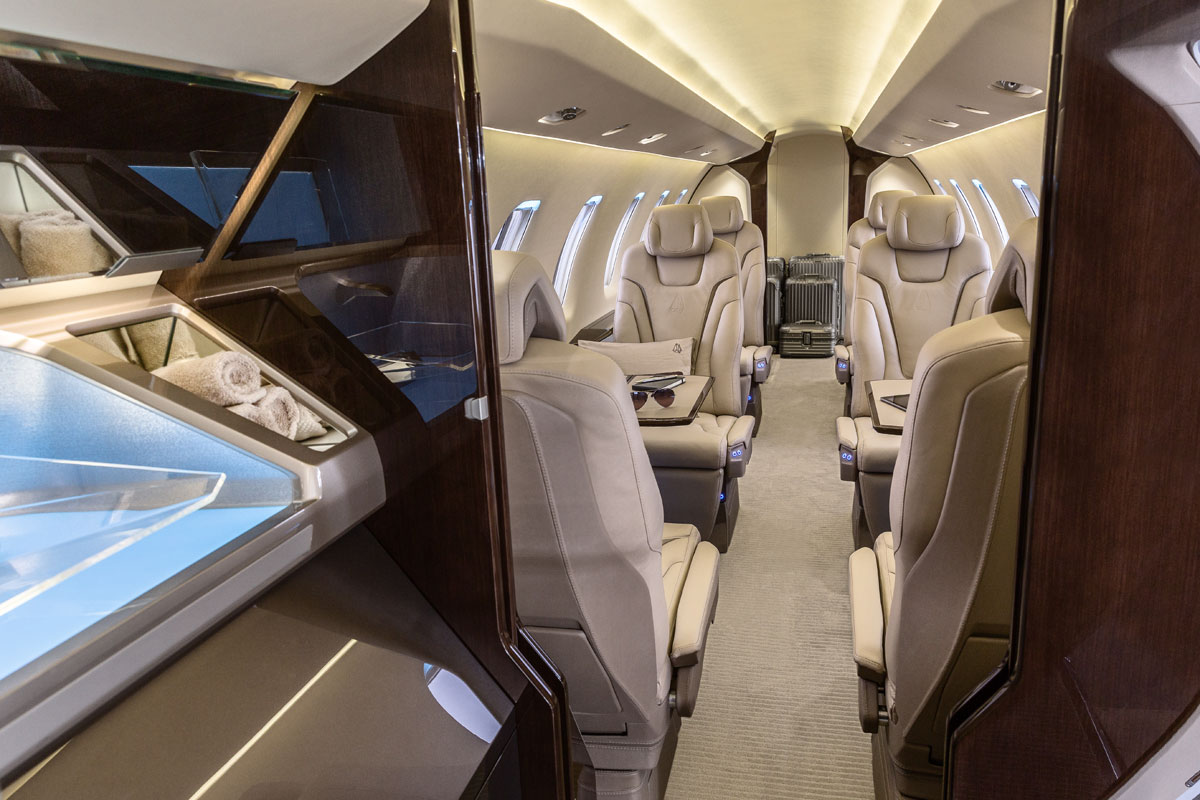
Inside the Pilatus PC24
The spacious cabin accommodates up to ten passengers in exceptional comfort, featuring large windows, club seating configurations, and a private lavatory. The aircraft’s signature feature—a large cargo door at the rear—allows for easy loading of oversized equipment or supplies, making it invaluable for medical evacuation, mining operations or remote construction projects.
Advanced avionics include the Pilatus Advanced Cockpit Environment (ACE), featuring synthetic vision technology and single-pilot certification. The aircraft’s service ceiling of 45,000 feet allows it to climb above most weather, whilst its pressurised cabin ensures passenger comfort throughout the journey.
Beechcraft King Air 350: The Proven Turboprop
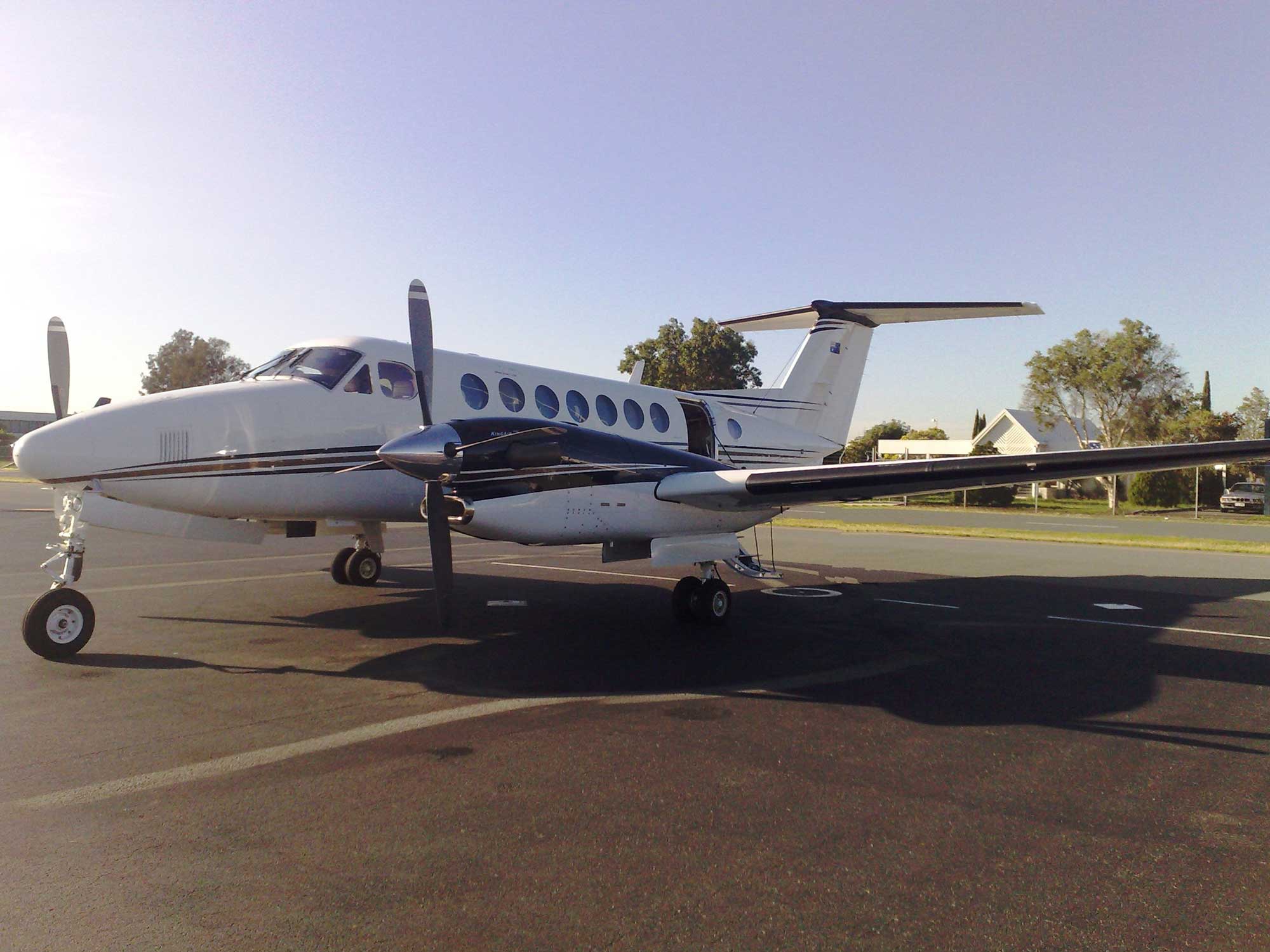
The Beechcraft King Air 350 represents four decades of turboprop evolution, offering a 2,000-kilometre range that covers most Australian regional routes with remarkable efficiency. Powered by twin Pratt & Whitney PT6A-60A engines producing 1,050 horsepower each, the King Air 350 achieves a maximum cruise speed of 578 km/h whilst maintaining the fuel efficiency that makes turboprops ideal for shorter regional sectors.
The King Air 350’s short takeoff and landing performance exceeds even the PC24’s impressive capabilities; thus opening access to virtually every regional Australian airport. The aircraft’s proven PT6A engines have accumulated millions of flight hours across Australia’s harsh operating conditions, from the tropical humidity of far north Queensland to the dust and heat of central Australia.
Passenger accommodation extends to eleven seats in various configurations, with the flexibility to adjust layouts for cargo, medical evacuation, or executive travel. The King Air 350’s cabin, whilst smaller than the PC24’s, offers proven comfort with effective noise insulation, climate control, and ergonomic seating arrangements that have satisfied operators worldwide.
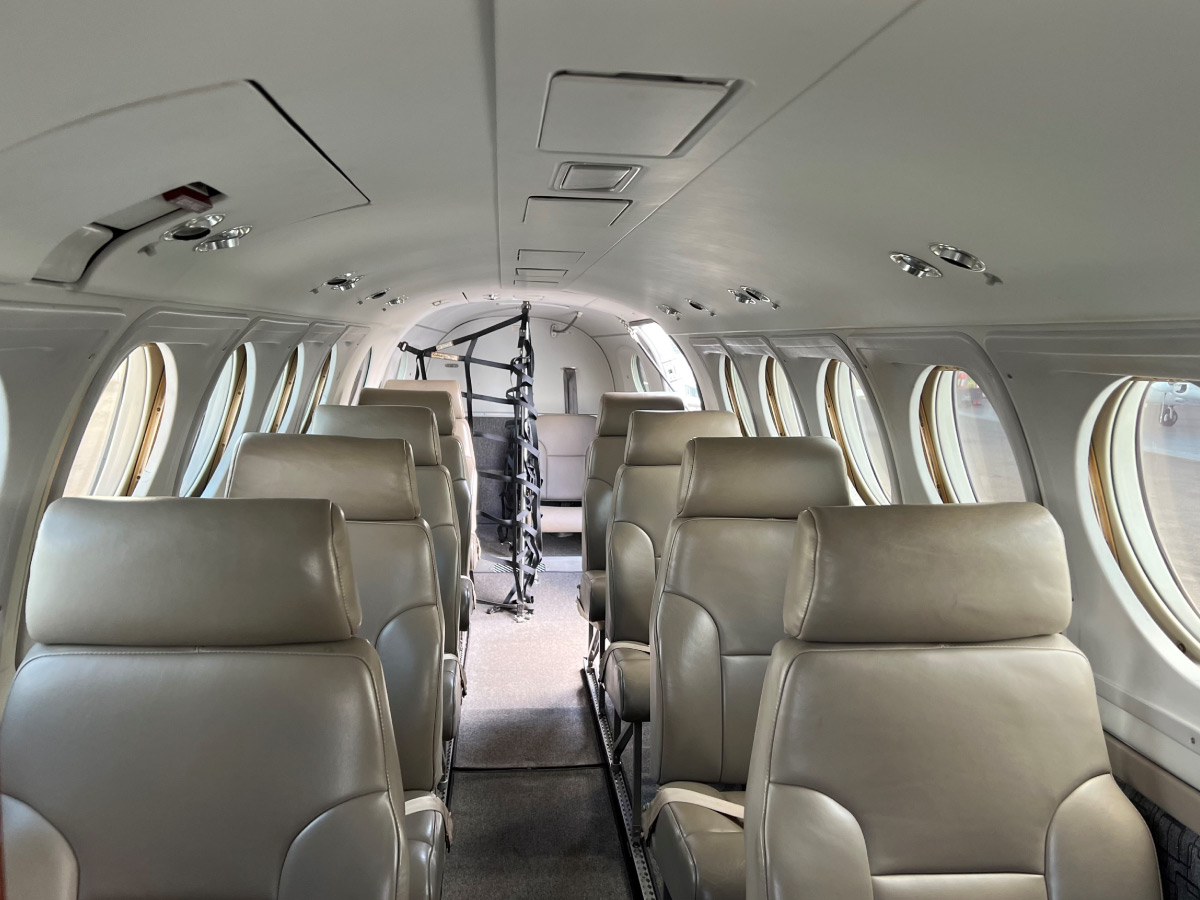
Inside the Beechcraft King Air 350 ‘Turboprop’
Collins Aerospace Pro Line Fusion avionics provide advanced navigation and situational awareness technology, including synthetic vision systems and traffic collision avoidance. The aircraft’s 35,000-foot service ceiling allows operations above most weather, whilst maintaining the ability to descend quickly when approaching regional airports.
Operating costs represent a significant King Air 350 advantage. Turboprop engines consume substantially less fuel than jets, particularly on shorter routes where aircraft spend limited time at efficient cruise altitudes. Maintenance requirements are typically lower, with PT6A engines renowned for reliability and relatively affordable overhaul costs compared to other charter aircraft options.
Head-to-Head Performance Comparison
| Specification | Pilatus PC24 | Beechcraft King Air 350 |
| Maximum Range | 3,700km | 2,000km |
| Cruise Speed | 815 km/h | 578 km/h |
| Takeoff Distance | 820 metres | 1,085 metres |
| Landing Distance | 770 metres | 820 metres |
| Service Ceiling | 45,000 feet | 35,000 feet |
| Passenger Capacity | 8-10 passengers | 9-11 passengers |
The PC24 clearly leads in speed and range, making it ideal for longer regional routes such as Perth to Darwin or Sydney to Cairns. Its jet engines provide superior performance at high altitudes and in hot conditions, whilst the unpaved runway certification opens unique destination possibilities.
The King Air 350 excels in operational flexibility and cost efficiency. Its turboprop configuration delivers superior fuel economy on shorter routes, whilst proven reliability and lower maintenance costs appeal to operators focused on frequency rather than speed. The aircraft’s shorter landing distance provides access to more challenging regional strips.
For detailed comparisons with other regional aircraft options, explore our comprehensive aircraft guide covering turboprops, light jets, and medium jets suitable for Australian conditions.
Ideal Mission Profiles for Each Aircraft
Pilatus PC24 Applications:
The PC24 excels on longer regional routes where speed justifies higher operating costs. Flying from Sydney to Cairns, the PC24 completes the journey in 2 hours 40 minutes compared to the King Air’s 3 hour 30 minute transit time. For corporate executives travelling between major regional centres, this time saving proves invaluable.
Mining operations benefit significantly from the PC24’s cargo door and unpaved runway capability. The aircraft can deliver personnel and equipment directly to remote mine sites, eliminating costly helicopter transfers or long road journeys. International connections also favour the PC24, enabling direct flights from regional centres to international destinations within its 3,700-kilometre range.
Emergency medical evacuations represent another PC24 strength. The aircraft’s speed reduces critical transport times, whilst the large cabin and cargo door accommodate medical equipment and stretcher patients with accompanying medical staff. View our full range of medical evacuation aircraft to understand all available options for critical transport missions.
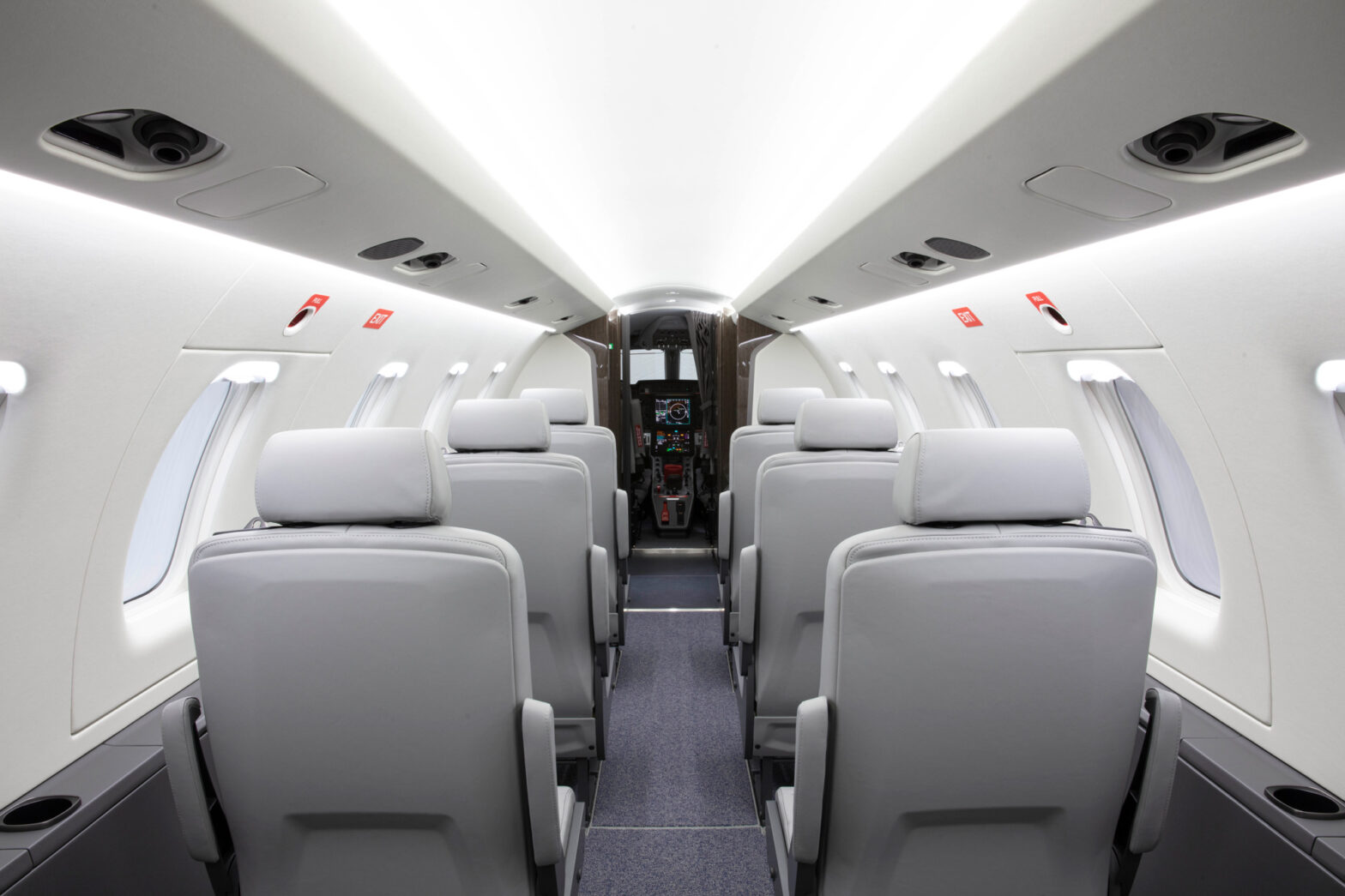
Inside the Pilatus PC24
Beechcraft King Air 350 Applications:
The King Air 350 dominates short to medium regional routes where frequent operations and cost efficiency matter most. Mining companies operating regular workforce rotations benefit from the turboprop’s lower hourly costs and proven reliability in harsh conditions.
Regional business travel within 2,000 kilometres favours the King Air 350’s combination of comfort, speed, and reasonable operating costs. Routes such as Brisbane to Mount Isa, Adelaide to Alice Springs, or Perth to Broome represent ideal King Air missions.
The Royal Flying Doctor Service and other aeromedical operators rely heavily on King Air variants for their proven reliability and ability to access remote airstrips safely. The aircraft’s turboprop configuration provides excellent single-engine performance—a crucial safety factor when operating over sparsely populated areas.
Tourism operators appreciate the King Air 350’s ability to access smaller regional airports whilst providing comfortable transport for groups exploring remote destinations. From accessing exclusive fishing lodges to providing scenic flights over the Outback, the aircraft’s versatility shines.
Making the Right Choice for Regional Australian Travel
Both aircraft represent excellence in their respective categories, yet the choice between them depends largely on mission requirements. The Pilatus PC24 appeals to operators prioritising speed, range, and unique airfield access, whilst accepting higher operating costs. Corporate travel, long-range regional routes, and specialised missions requiring unpaved runway capability favour the PC24.
The Beechcraft King Air 350 suits operators focused on proven reliability, operational efficiency, and cost-effective frequent operations. Regular workforce transport, shorter regional routes, and applications where turboprop economics matter most favour the King Air.
Australia’s regional aviation market benefits enormously from having both options available. The diversity of regional travel requirements—from urgent medical evacuations to routine mining transfers—demands aircraft with different strengths and capabilities.
Whether you require the speed and range of a business jet or the cost-effective reliability of a turboprop, our extensive aircraft charter range ensures the perfect match for your specific regional travel needs.
Experience Regional Aviation Excellence with Adagold Aviation
Selecting the optimal aircraft for your regional Australian charter flight requires expertise in matching aircraft capabilities to mission requirements. Adagold Aviation’s 30 years of charter flight management experience ensures you access the right private aircraft for every journey, whether accessing remote mining sites or reaching exclusive regional destinations.
Our comprehensive range of available aircraft includes both Pilatus PC24 and Beechcraft King Air 350 aircraft, operated by certified operators meeting our stringent ISO 9001 quality standards. From initial consultation through to touchdown at your destination, our team manages every detail of your charter flight experience.
Contact Adagold Aviation today to discuss your regional travel requirements and discover how our aircraft charter expertise can connect you to any Australian destination safely, efficiently, and in comfort.